
There’s a moment every visitor to the Deep South has. You come round the mountain on the M4, False Bay opens up on your left, and something in your shoulders just… drops. That’s the Deep South doing its thing.
Technically, it’s the stretch of Cape Peninsula south of Muizenberg — the string of villages tucked between mountain and sea that most first-time visitors skip in favour of the V&A Waterfront and Camps Bay. Their loss. This is where Cape Town slows down: surfers padding out at dawn, fishermen selling snoek off the harbour wall, tidal pools instead of infinity pools, and a version of “luxury” that means walking barefoot from your bed to the beach.
This guide is for anyone planning a Deep South trip — whether you’ve got 48 hours or two weeks, whether you’re chasing waves, quiet mornings with a flat white, or a proper hike with a view. We live here. Consider this the local’s version of the map.
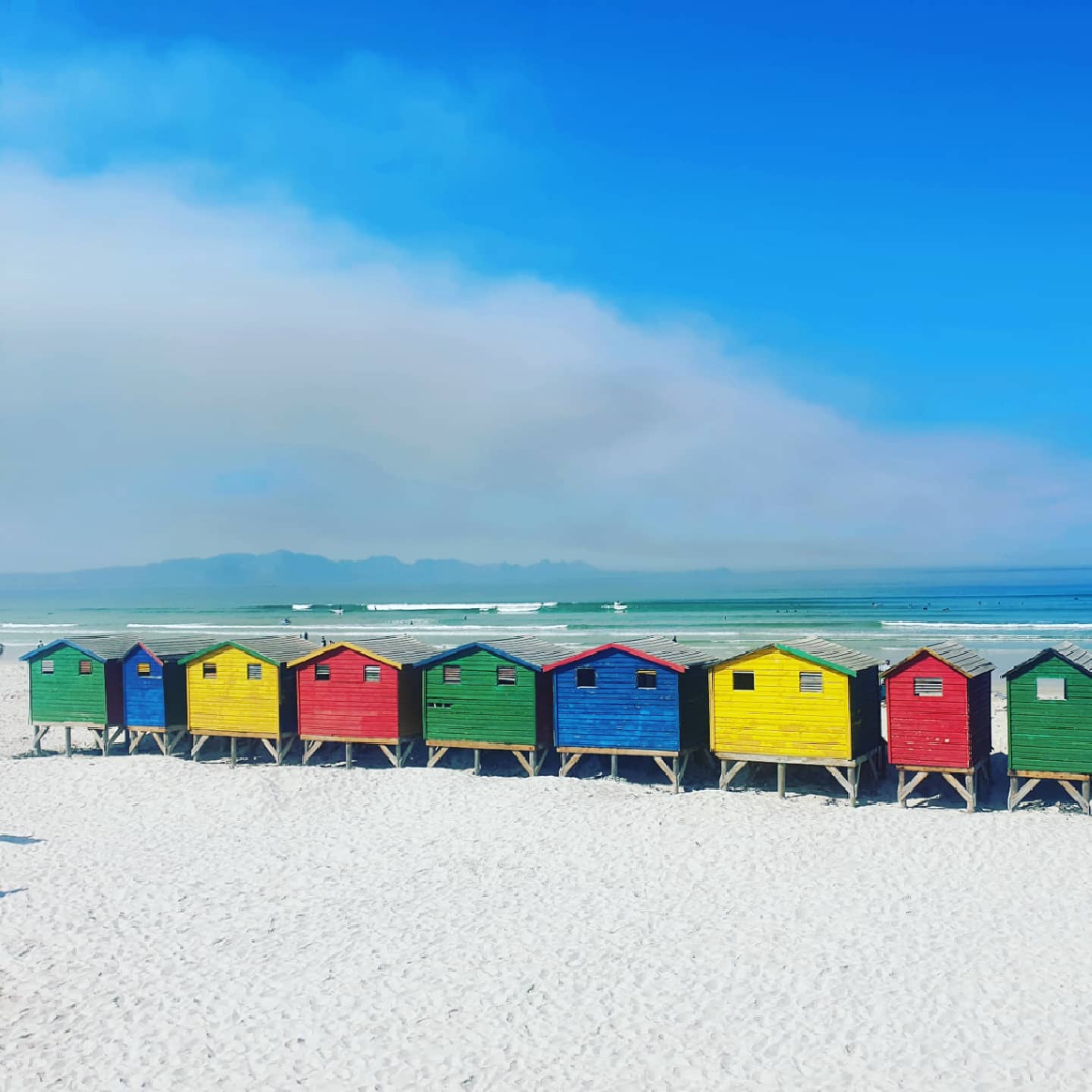
“Muizenberg’s rainbow bathing boxes, surfers and glassy waves”
Muizenberg — Surf, Colour, and Easy Energy
Muizenberg is the Deep South’s front door, and it makes a good first impression: those famous rainbow-coloured Victorian bathing huts, a long stretch of sand, and enough surf schools to teach the whole family in one weekend.
Best beaches & surf spots
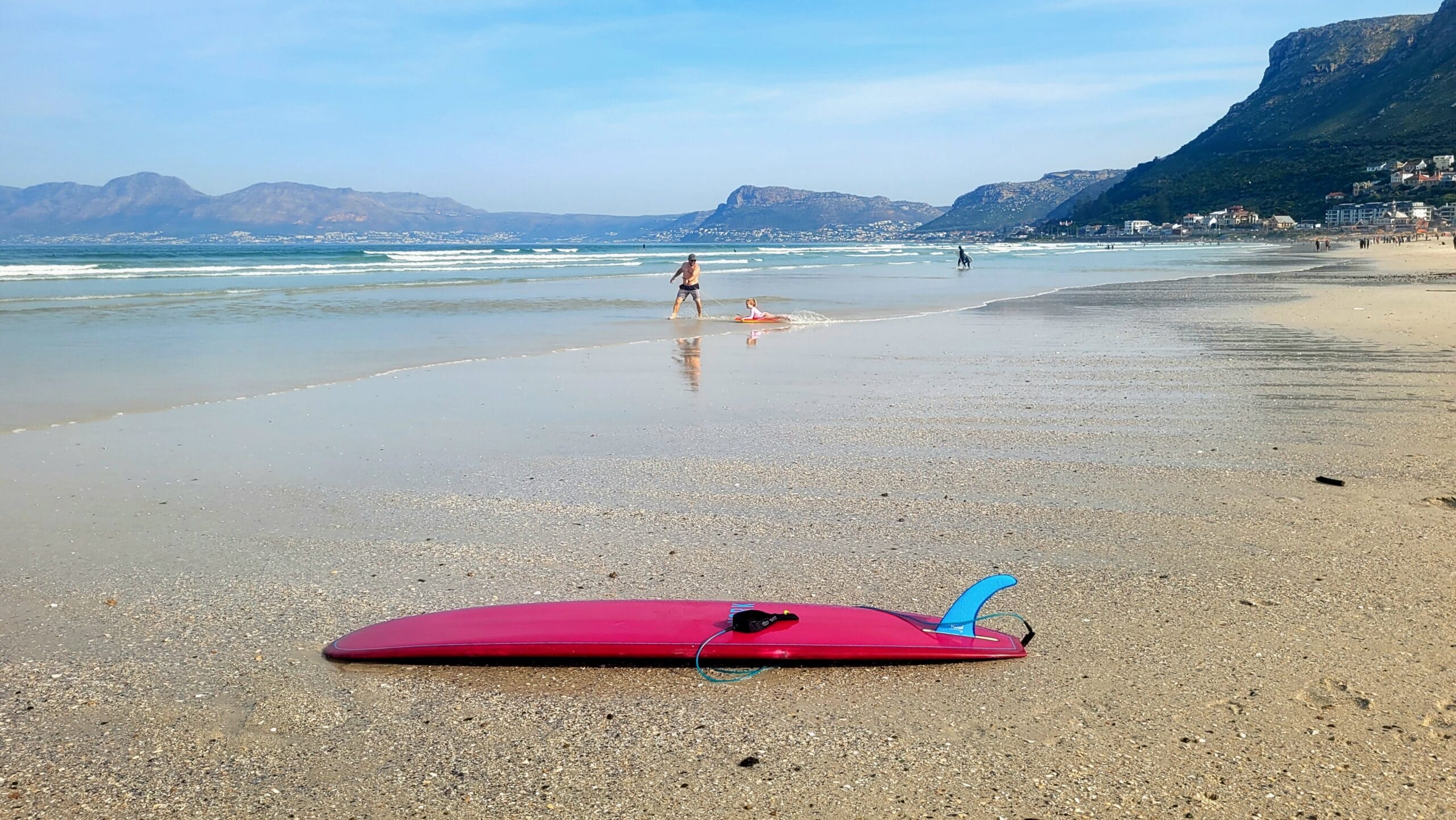
Muizenberg beach itself is the easiest place in Cape Town to learn to surf — gentle, consistent waves and a sandy bottom that forgives beginner wipeouts. Surfer’s Corner, right by the bathing huts, is where most of the schools operate. If you already know what you’re doing, paddle further along toward Sunrise Beach for a bit more space and fewer lessons happening around you.
Where to eat
Empire Café is the Muizenberg institution — order the smoothie bowl, grab a spot on the upstairs deck, and watch the surf while you eat. Knead Bakery does the bread and pastries that Capetonians drive across town for. For something more low-key, the coffee carts along the beach road do the job perfectly well if you’d rather not sit down at all.
Good for
Surfers of every level, families with kids who want a soft-sand beach and warm(er) water by False Bay standards, and first-timers who want the Deep South’s energy without venturing too far off the beaten path.
“Muizenberg beach, good for families and surfers, Cape Town’s Deep South”
Muizenberg’s mix of surf culture and colour is exactly the vibe behind Muizenberg Surfers Lodge — walking distance to the break, close enough to Empire Café that your board and your coffee order can happen in the same ten minutes.
St James — Tidal Pools and Postcard Views
A five-minute drive south of Muizenberg, St James trades surf-town buzz for something quieter and more photogenic.
The bathing boxes & tidal pool
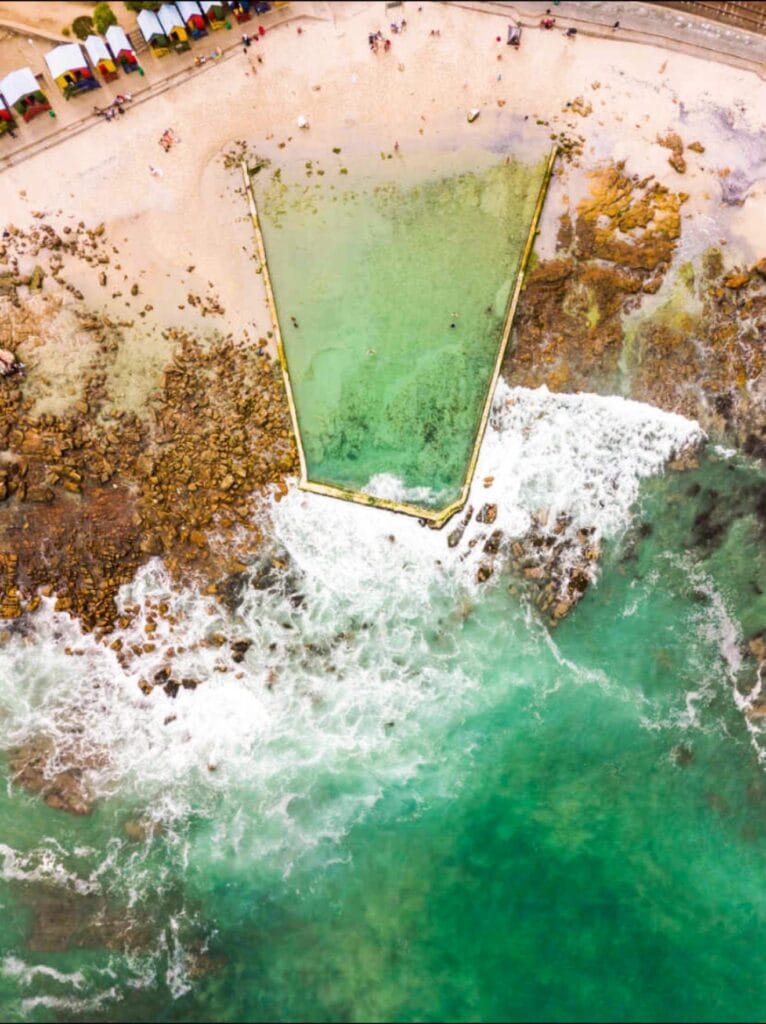
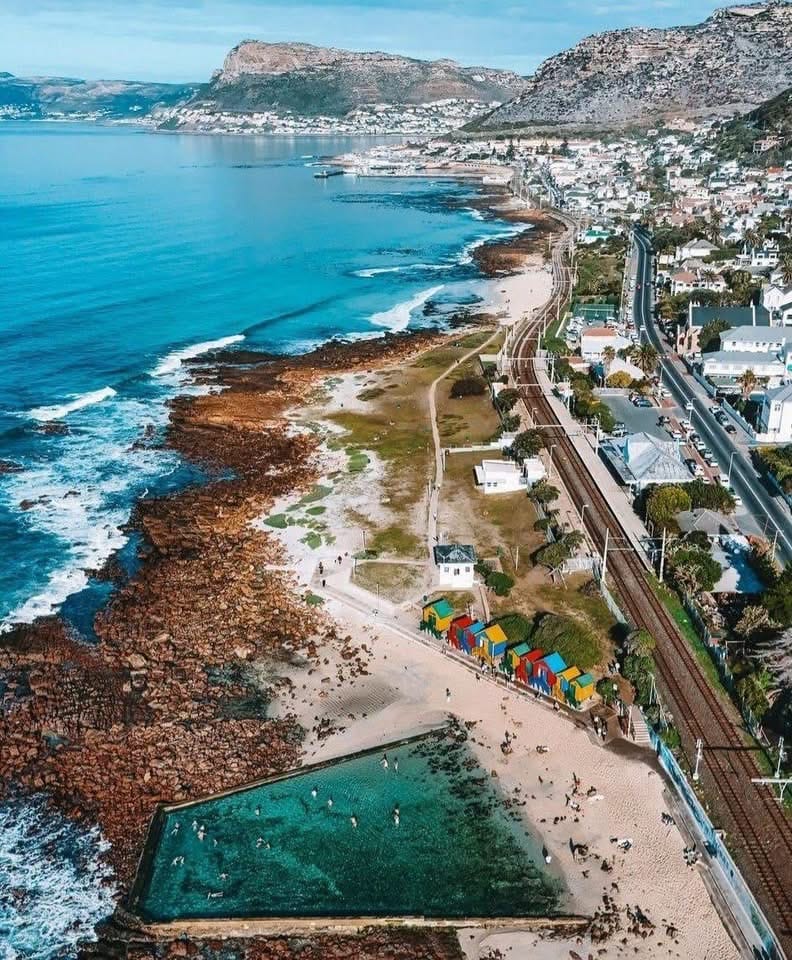
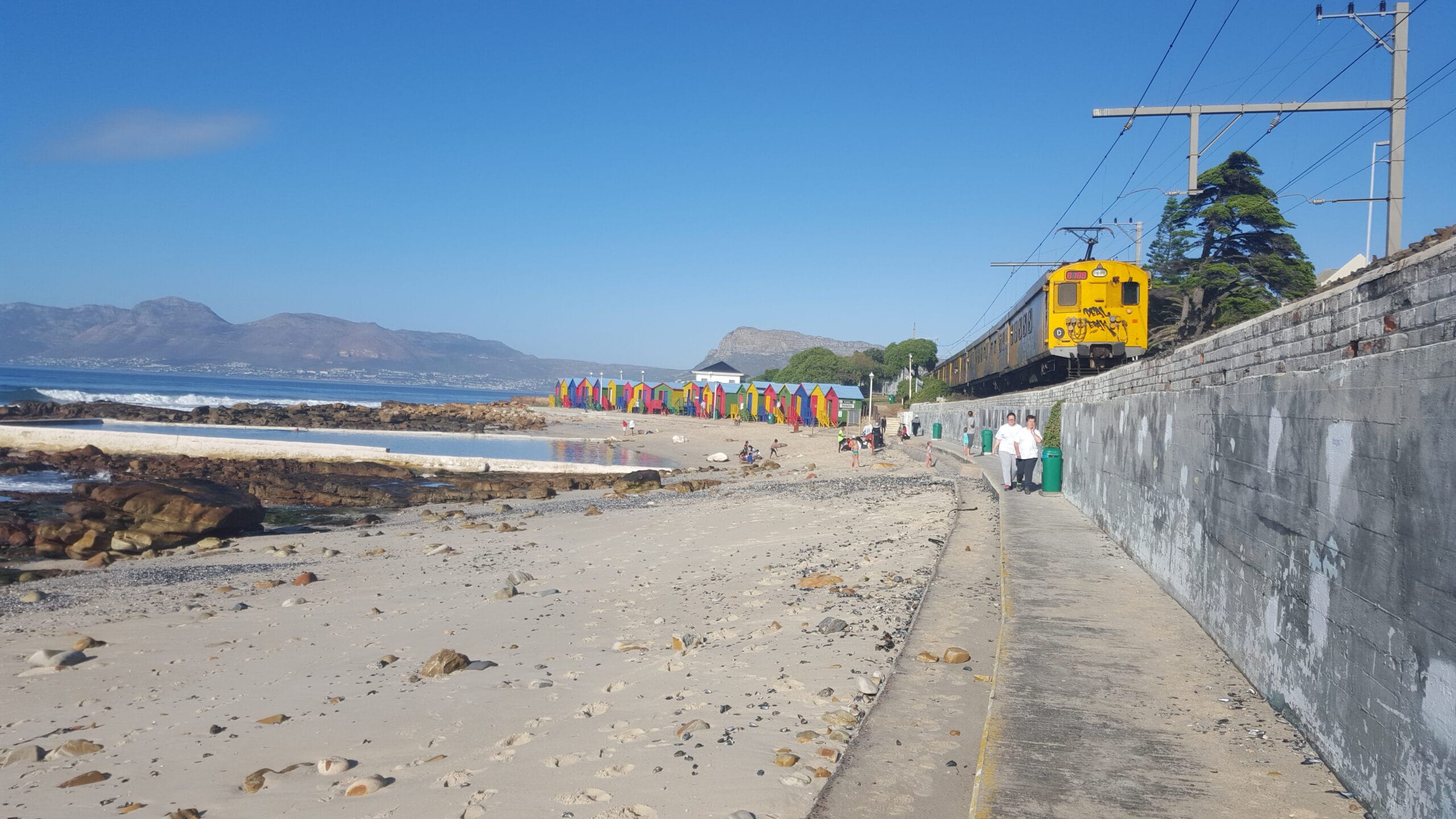
St James has its own set of bathing boxes — smaller, more photographed, and perched right above the village’s real draw: a natural tidal pool carved into the rocks. Calm, clean, and refilled by the tide, it’s the safest swimming spot in the area and a favourite for a slow morning dip before anyone else is awake.
Danger Beach
Just next to the tidal pool, Danger Beach lives up to its name with a bit more swell and rock, making it popular with bodyboarders and more confident swimmers who want something with a little edge.
Good for
Couples wanting a quiet, view-heavy base, and families who’d rather have their kids in a calm tidal pool than open surf.
“St James tidal pool and bathing boxes with False Bay views, Cape Town’s Deep South”
If St James’s postcard views and calm water sound like your kind of morning, St James Beachfront Villa sits right above it all — panoramic False Bay views from a spot you won’t want to leave for the day trip you’d planned.
Kalk Bay — Harbour Life and Hidden Charm
Kalk Bay doesn’t try very hard, and that’s exactly its charm. It’s a working harbour village that happens to also be one of the most atmospheric stops on the whole Peninsula.
Kalk Bay Harbour & fresh fish
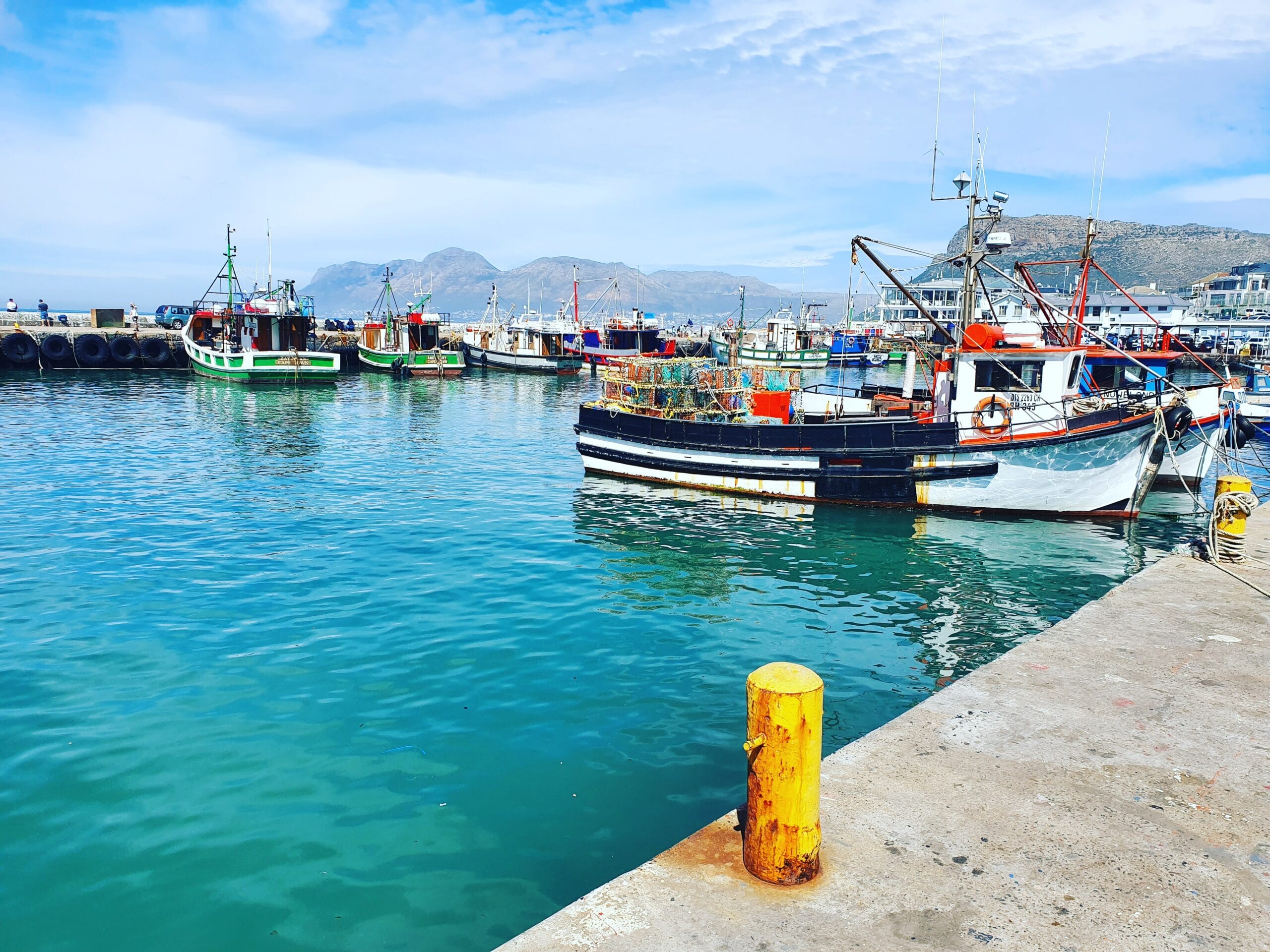
Time your visit for late morning when the fishing boats come in, and you can buy snoek, yellowtail, or whatever’s running straight off the boat. Grab fish and chips from one of the harbour stalls and eat it on the wall, seals occasionally popping up to see if you’re willing to share.
Antique shopping & cafés
Main Road is a proper rabbit hole of antique shops, bookstores, and galleries — the kind of place you plan to pop into for ten minutes and leave an hour later. Olympia Café remains the local standard for a long breakfast, and there are enough independent coffee spots along the strip to fuel a full afternoon of browsing.
Good for
Anyone who wants a taste of the Deep South’s working, lived-in side rather than its holiday side — this is where locals actually spend their Saturday mornings.
“Fishing boats and fresh catch at Kalk Bay Harbour, Cape Town’s Deep South”
Scarborough — Fynbos, Quiet, and Wild Coastline
Push further south, past Simon’s Town and Cape Point, and the villages start to feel genuinely remote. Scarborough is the Deep South at its wildest.
Scarborough Beach & hiking trails toward Cape Point
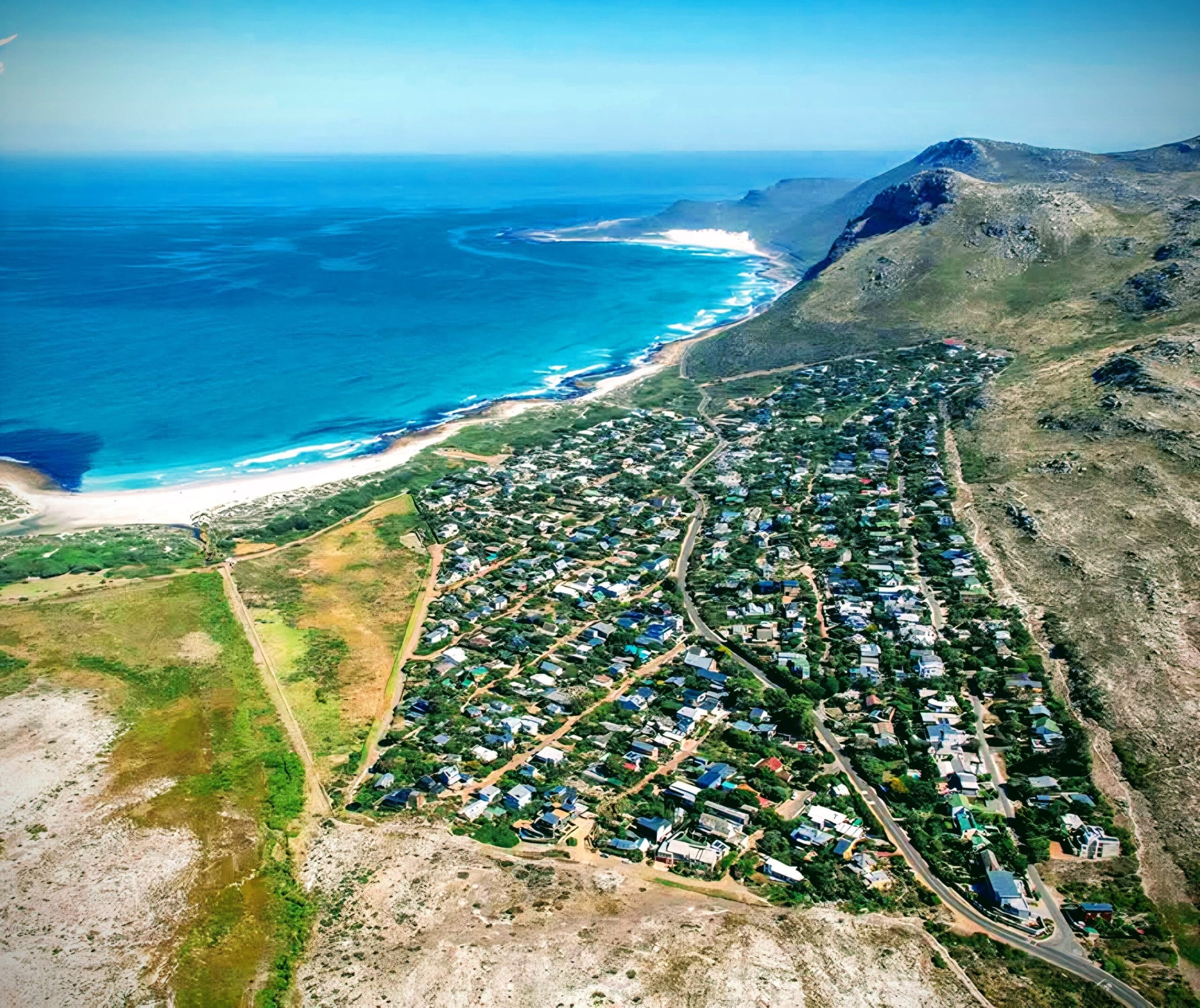
Scarborough’s beach is long, wide, and often close to empty — backed by fynbos-covered hills rather than buildings. It’s a serious surf spot for those who know it, with a cold, punchy break that draws a small, loyal crowd. From the village, trails head out toward the Cape of Good Hope Nature Reserve and Cape Point, with proper coastal hiking and a real chance of spotting eland, bontebok, or an ostrich or two along the way.
Village cafés, good food & slow afternoons
Scarborough is made for slow mornings and relaxed meals. Start with coffee or breakfast at Whole Earth Café, browse the Village Hub, or settle in for Italian-inspired pizza and pasta at Sopra. For a relaxed evening, Camel Rock is a local favourite for good food, drinks and a laid-back atmosphere.
Good for
Nature lovers, remote workers who want genuine quiet (no need to get in a car for most of what matters), and surfers chasing a less crowded break than Muizenberg’s.
“Scarborough Beach with fynbos-covered hills near Cape Point, Cape Town’s Deep South”
This is the setting for Scarborough Beach Bungalow — fynbos on one side, wild coastline on the other, and the kind of silence that’s hard to find anywhere else on the Peninsula.
Newlands — Garden Retreat Under Table Mountain
Newlands is the odd one out on this list geographically — it sits on the other side of the mountain, in Cape Town’s southern suburbs rather than along False Bay. We include it because it’s part of the same slow, green, barefoot-luxury story, just with Table Mountain’s forested slopes instead of the ocean at the door.
Kirstenbosch & Newlands Forest
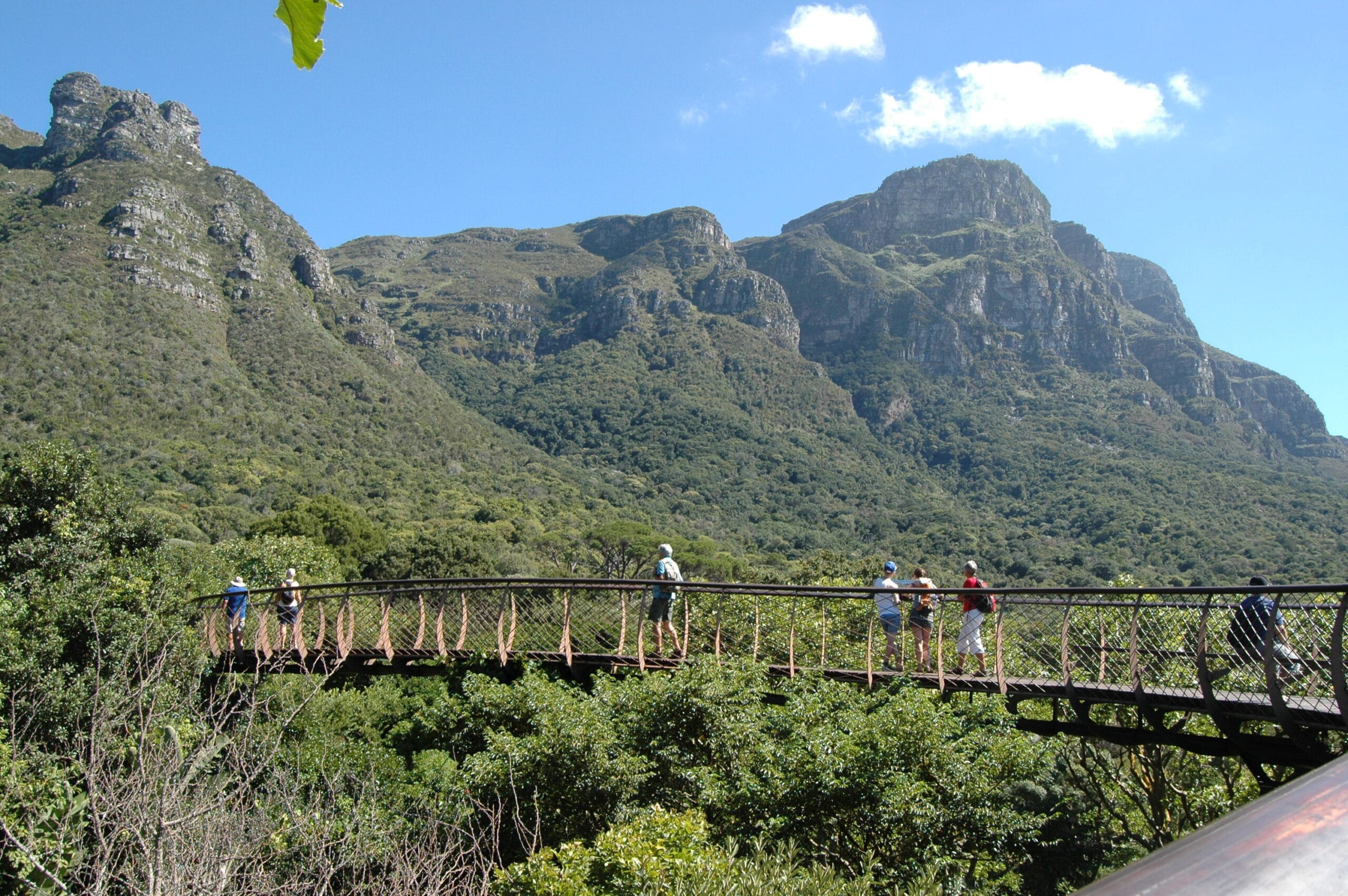
Kirstenbosch National Botanical Garden is right on Newlands’s doorstep — go for the Boomslang canopy walkway, stay for a picnic on the lawns below Table Mountain. Newlands Forest offers proper shaded hiking trails a few minutes further, popular with trail runners and anyone wanting tree cover on a hot day.
Cafés, gardens & good food
Newlands has plenty of easy options for coffee, breakfast and a relaxed meal. Hudson & Lloyd is a good stop for coffee or something to eat, while The Vineyard Hotel offers several restaurants in a beautiful garden setting. For a more casual option, Barristers is a local favourite for a relaxed pub lunch, and La Cuccina is a good choice for Italian-style food.
Good for
Couples wanting a garden-and-mountain retreat, professionals here for work who want green space over beach, and anyone curious about the Deep South’s quieter, forested cousin.
“The Boomslang walkway at Kirstenbosch, Newlands’s garden escape”
Newlands Rose Cottage sits in exactly this setting — sophisticated, under the mountain, five minutes from Kirstenbosch’s gates.
Hidden Gems Locals Actually Go To
The famous spots are famous for a reason, but here’s what doesn’t make most guidebooks:
- Dalebrook tidal pool - St James's quieter, less-photographed sibling. Fewer people, same calm swim.
- Casa Labia in Muizenberg - an Italianate mansion turned cultural centre with a genuinely excellent café; go for lunch on the terrace.
- Wolfgat Nature Reserve - cliff walks and coastal fynbos with almost nobody else on the trail.
- Silvermine Reservoir - a short walk from the parking area to a reed-lined reservoir with mountain views, a favourite for a picnic that isn't a beach picnic.
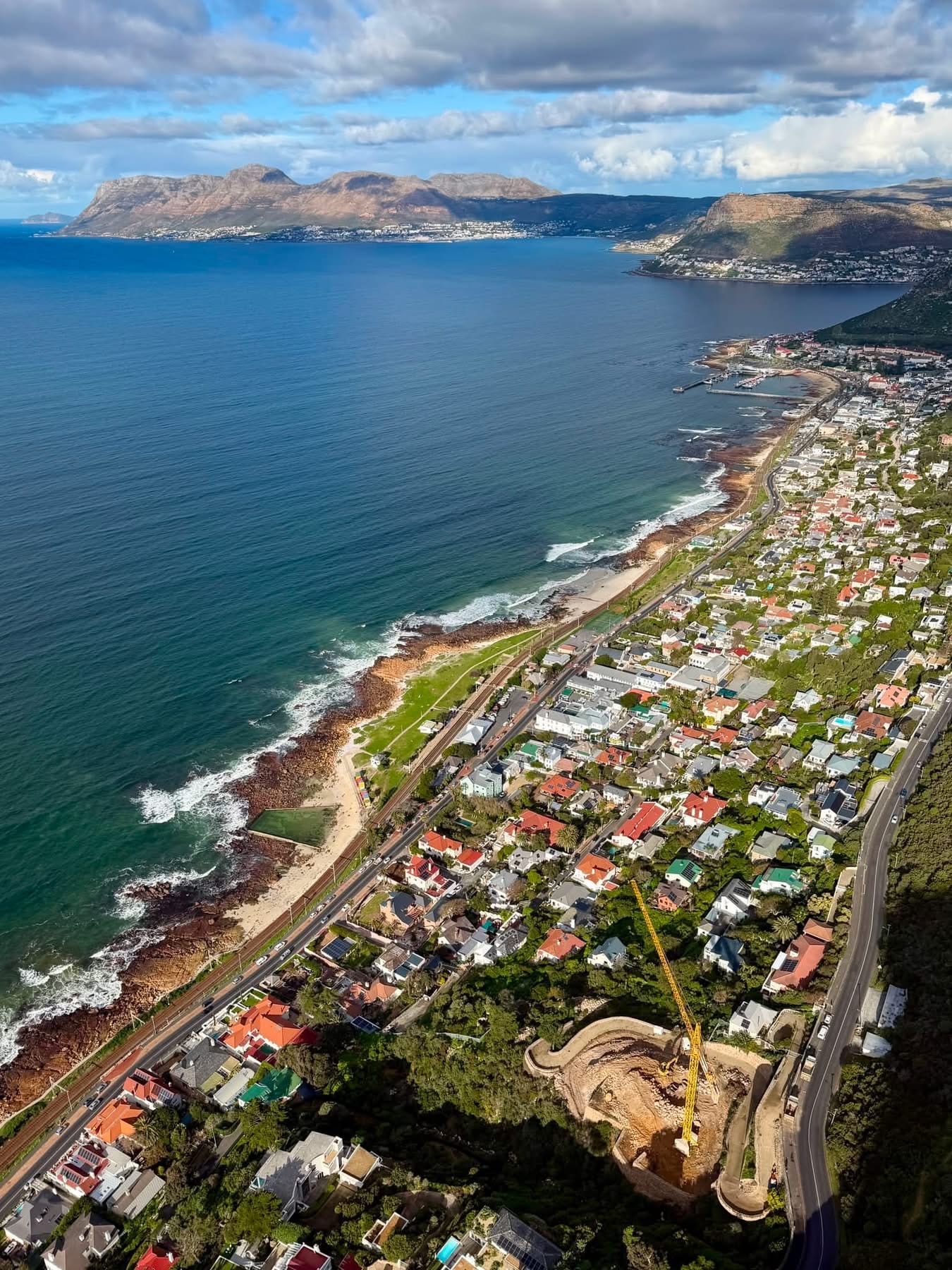
- Boyes Drove at sunset - technically a road, not a destination, but pull over anywhere along it as the light goes gold over False Bay and you'll understand why locals do this on a random Tuesday.
Best Time to Visit the Deep South
Most Cape Town guides point you here for summer (December–February) and stop there — fair enough, the weather’s reliably warm and the water’s as good as False Bay gets. But the Deep South doesn’t switch off for the rest of the year.
- Summer (Dec–Feb): Peak season, warmest water, busiest beaches. Book well ahead.
- Autumn (Mar–May): Our secret season — settled weather, thinner crowds, and some of the best light of the year for that Boyes Drive sunset.
- Winter (Jun–Aug): Cooler and wetter, but this is prime surf season for those chasing bigger swells, and Newlands Forest is at its greenest.
- Spring (Sep–Nov): Fynbos wildflowers along the Scarborough and Cape Point trails, whales still visible in False Bay into early summer.
If you want the Deep South at its most relaxed — good weather, real availability, none of the peak-season scramble — autumn is the one locals quietly keep to themselves.
Practical Tips
Getting around without a car
The Southern Line makes it possible to explore parts of the Deep South without a car, with stations connecting areas such as Muizenberg, St James, Kalk Bay and Simon’s Town. Check the latest PRASA train schedules before travelling. It is one of Cape Town’s most scenic rides, hugging the coast the entire way. It’s an easy, car-free way to hop between villages for the day. Scarborough and Newlands are better reached by car or e-hailing app, as they sit further off the rail line.
Safety notes
Like anywhere, keep an eye on valuables at the beach and avoid isolated trails alone after dark. The Southern Line has had safety concerns in the past — check current advisories before relying on it after hours, and prefer daytime travel. Ocean conditions can change quickly at exposed spots like Danger Beach and Scarborough; if in doubt, ask a local before swimming
What to pack
Layers, always — the Peninsula can shift from warm sun to a cool sea breeze within the hour. A wetsuit or rental if you’re surfing (False Bay water is bracing even in summer), good walking shoes for the trails, and a reusable water bottle for the hikes toward Cape Point.
FAQ
Is the Deep South safe?
Generally yes, and it’s one of the more relaxed parts of Cape Town for visitors. As with anywhere, use common sense — don’t leave valuables visible in cars, stick to well-used trails, and check current safety advisories for train travel.
Do you need a car in the Deep South?
You don’t necessarily need a car for Muizenberg, St James or Kalk Bay — the Southern Line and short distances make these areas relatively easy to explore without one. For Scarborough or Newlands, having a car or using an e-hailing service makes getting around considerably easier.
Which village is best for surfing?
Muizenberg for beginners, Scarborough for experienced surfers wanting a quieter, colder break.
Which village is best for families?
Muizenberg for its soft sand and surf schools, or St James for calm tidal-pool swimming.
Which village is best for remote work or a quiet break?
Scarborough, hands down — followed closely by Newlands if you’d rather have mountain forest than open coastline outside your window. Both offer a slower pace, space to switch off, and easy access to nature.
Ready to Base Yourself in the Deep South?
Whichever village pulls at you — Muizenberg’s surf energy, St James’s postcard calm, Scarborough’s wild quiet, or Newlands’s garden retreat — the easiest way to actually live it, rather than just visit it, is to stay in it.